

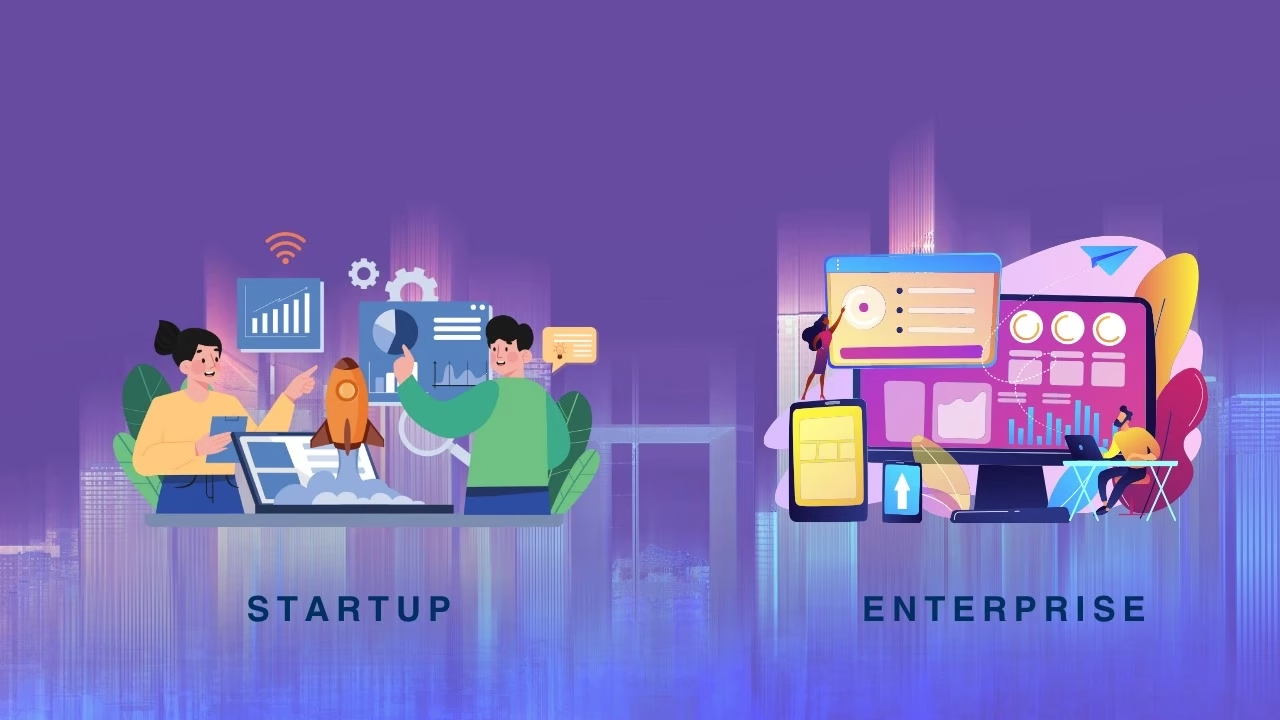
In Singapore, a startup’s first tool can spark a revolution. An enterprise’s wrong tool can cost millions. Both build with tech, but their blueprints could not be more different. The contrast is loud. Startups run on chaos, speed, and constant change. Enterprises thrive on structure, scale, and systems that don’t break. Same city. Same market. Completely different tech mindsets. In a market where every second counts, choosing the wrong tools can slow you down. Or worse, bring you crashing to a halt. In this blog, let’s understand the right-fit tech strategy for startups and enterprises in Singapore. We will decode how these two business worlds choose their tech stacks.
Difference Between Startup and Enterprise
Let us first understand the structural and operational differences between startups and enterprises. Then we will move forward with their tech strategies.
Startups are typically small. They have flexible teams. That means employees are working across multiple roles. They operate with limited resources. Startups have a high appetite for risk. Since they are in the early stages of growth, their focus is on speed. It is widely accepted that testing ideas quickly and adapting fast is the hallmark of startups.
Enterprises, on the other hand, are larger organizations. Therefore, they have well-defined processes. The hierarchical structure of an enterprise works on layered decision-making. Here, the focus is more on stability and consistency. It is on sustaining established operations.
When comparing startups and enterprises, their goals, methods, and risk tolerance couldn’t be more different. The following comparison sums up the key distinctions:

Understanding the Tech Needs of Startups vs. Enterprises
The technology stack required by a startup is not only different from an enterprise’s, but it is often the opposite.
Startups need tools that are affordable because of limited budgets. That’s why choosing the right tech stack for your startup in 2025 is critical to balancing speed with sustainability. The tools should be easy to use and quick to implement. This is because a startup is often in a rapid growth phase, so they need to move and adapt faster. Cloud-based solutions like AWS, Google Cloud, Slack, or Notion provide scalable infrastructure. This allows them to launch products fast and make changes without major disruptions.
Enterprises demand tech tools that work well together. Technologies that are secure are absolutely essential. They often use large systems like ERP (for managing everything). Here, custom-built software is used to build long-term solutions. They may use Microsoft Azure or Salesforce. These are all chosen to work smoothly for a long time across all their different teams.
A successful tech strategy for startups and enterprises in Singapore needs to consider these requirements. It’s not just about how big they are, but also how much they’re growing and how complicated their work is.
Key Challenges Faced by Startups and Enterprises in Singapore
Singapore is a very modern and digital-focused place to do business. Still, it’s not without its hurdles.

Startups in Singapore often struggle with a few common problems. They generally have limited money. That is the reason they find it tough to hire skilled tech professionals. It is also a difficult task for them to keep up with rapidly changing digital trends. Additionally, following Singapore’s data privacy laws (like PDPA) can take a lot of time and resources for small teams.
Big companies, also known as enterprises, face their own issues. It is common for them to deal with old, outdated technology systems. These are very hard to update. It can also take a long time to get approval from the upper management. Therefore, there are often delays in actually using new technologies. This happens because of the bureaucratic structure. And because they are so large, they have much higher stakes when it comes to cybersecurity. It is also a challenge making sure they follow all the rules.
Choosing the Right Tech Strategy for Your Business Stage
If you are looking for one strategy that would fit all businesses, then that is the wrong approach. In fact, technology planning is a necessity for crafting your tech roadmap. And each business has its own priorities. Therefore, there are different strategies suitable for different growth stages.
New startups should go for low-cost, cloud-based tools. These tools help them try out ideas quickly. Choose simple products (MVPs), automation tools, and easy-to-use “no-code” platforms. They are all about being flexible and fast deployment.
For scaling startups, they need to invest in stronger tech. This means good data systems, tools to manage customers (CRM), and secure online storage. These help handle more users and bigger teams.
Enterprises need integrated systems. They require tech that works together smoothly. They focus a lot on data security. Inter-departmental coordination is very important here, given that there are many interconnected departments. All this while being stable without falling behind in innovation.
Take Away
The biggest tech mistake a business can make is simply copying what other companies do. It does not matter if you’re a small startup in a shared office. It does not matter if you are a huge company with hundreds of employees. What does matter is that your technology choices need to match your current stage, size, and business plan.
Singapore has many helpful tech resources, like cloud services and government support. But ultimately, your success depends on having a clear idea of what your own business needs.
A strong tech strategy for startups and enterprises in Singapore means making smart, purposeful choices. Try to choose tools that can grow with you. Go with the systems that will keep you safe. Keep your focus on ways of working that will move you forward.
In case you find yourself in a tech dilemma, Singha Tech Solutions is here to pull you out. We help build smart, scalable systems that power both startups and enterprises.