

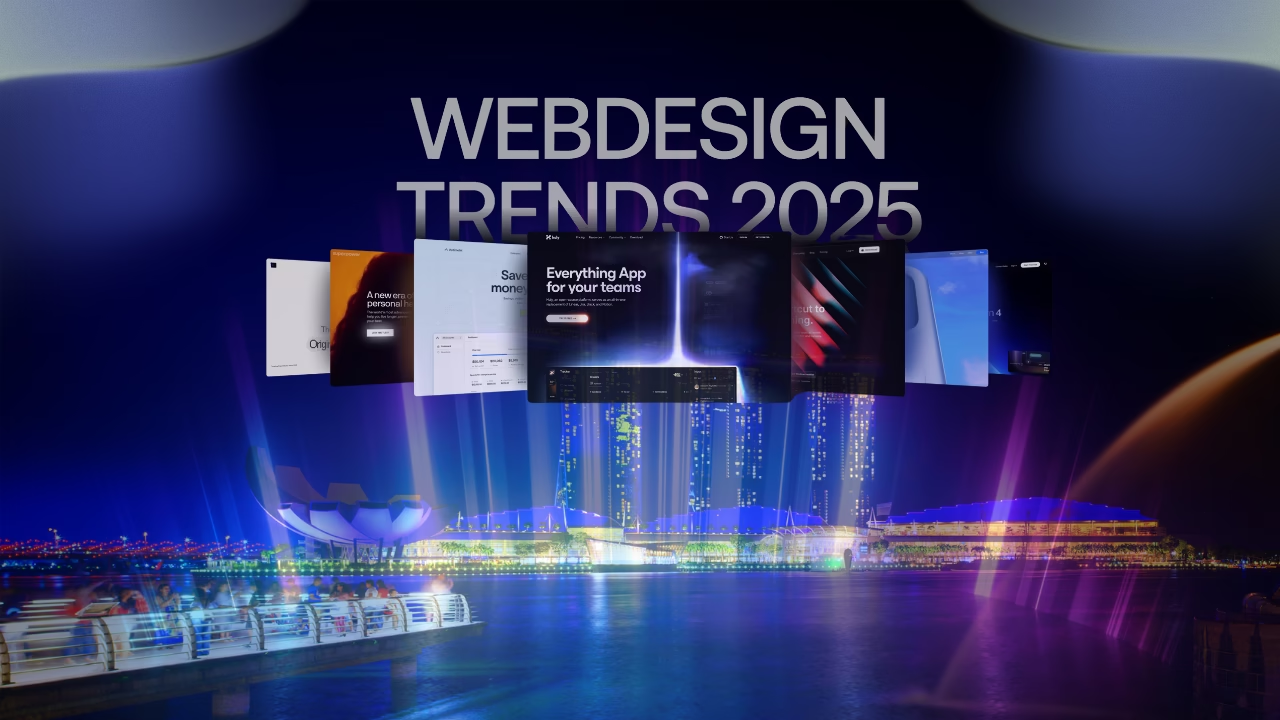
Staying up to date is a must in the business world. But many tend to forget the face of their business, their website. Singapore’s digital market is evolving fast. Specifically, web design in Singapore shapes this shift. Whether you’re a small business or a growing enterprise, staying updated with web design trends helps you stay competitive and relevant. In this blog, we will cover timeless website practices. We will discuss what’s trending in the B2B world. As a bonus, we will explore what the future may bring. Let’s take a sneak peek at 3 Top website design trends 2025 in Singapore: Here it is.
Dark Mode & Accessibility-First Design: It is noticed that the dark mode is very popular among younger users. It has found its place in web design trends Singapore as well. It gives off the “modern aesthetics”.
AI-Powered Personalization: AI tools are being used to create content that talks to the user in a way that suits them. This includes layouts, product suggestions, and much more.
Microinteractions & Subtle Animations: Tiny movements like hover effects, scroll reveals, and animated icons are increasingly used.
But before we jump into the latest trends, let’s walk through the all-time favorites of good website design. These best practices never go out of style.
Best Website Design Trends That Are Always in Demand
There are so many designs to pick from. It is equally exciting and confusing to choose the perfect one for your website. You want to make sure it suits your theme. Then, it should be aesthetically pleasing as well. Most importantly, users should find it comfortable, a.k.a. non-frustrating. Basically, it all comes down to these aspects:
1. Responsive Layouts
Almost everyone browses on different devices these days. People use their phone on the go, a tablet on the couch, or a desktop at work. Your website needs to feel like it belongs on each device. It must work perfectly on all of them. Otherwise, users are left zooming in or squinting. Sometimes, content gets awkwardly cut off. That looks unprofessional and takes away your website’s authority.
Responsive layouts simply mean your website intelligently adjusts itself to fit any screen size. It should not matter how they are viewing your site. Navigation should not feel like a puzzle but a smooth, seamless experience.
2. Fast Performance
A user does not hate anything more than seeing a page just… load… load… and… yeah, you guessed it, load! It’s like either your website pops up in a few seconds, or someone else’s will. Your dear user isn’t sticking around if “time” is what they’re spending.
To keep your visitors happy and engaged, your site needs to be super snappy. This means using clean code. Make sure your images are optimized (so they are not huge files slowing things down). Pick lightweight plugins (small in size). Tools like PageSpeed Insights can help you identify what’s slowing down your website.
Harsh truth: if you are not fast, you do not exist in this digital world! So, focus on fast website performance.
3. Straightforward Navigation
A clear menu helps users find what they need quickly. For example, a “Shop” tab can have drop-downs for “Men,” “Women,” and “Kids.” Sticky headers keep the menu visible even while scrolling. This lets users jump to “Cart” or “Contact” anytime. A logical page flow guides users step by step. Therefore, moving from product details to reviews, then to checkout, should be a piece of cake. These features work together to make browsing easy and smooth.
4. Easy-to-Read Typography
This is actually one of the most important website design trends. Because typography shapes the reading experience. You must choose fonts that are simple and clean. For example, fonts like Lato or Open Sans work well. Keep the font size around 16px. Add enough spacing between lines to avoid clutter. Avoid long blocks of text. That means break them into short paragraphs. This keeps the content light and inviting. When text is easy to read, visitors are more likely to stay and explore.
5. Visual Consistency
A consistent look builds brand trust. Try sticking to a fixed color palette throughout. For instance, soft beige with navy blue. Choose one icon style, such as thin line icons, and stick with it throughout. Keep your layout structure steady. That means always placing headlines at the top and buttons in the same corner. Repeating patterns like this give your site a clean, professional feel. It tells visitors you pay attention to detail.
3 Current B2B Website Design Trends 2025
The B2B landscape in Singapore is seeing a fresh wave of B2B website design trends aimed at improving communication and conversions.
1. Smart Content Blocks
Modern user-friendly websites use flexible content blocks. They no longer rely on those static text boxes. These blocks change based on what a visitor clicks or searches for. For example, someone looking at pricing may see client case studies nearby. This keeps content focused and helpful. Visitors aren’t overwhelmed with too much text at once. They get just what they need, right when they need it.
2. Real-Time Interaction Features
Instant support keeps your visitors hooked. Chatbots answering simple questions in seconds makes people entrust your platform. Or quick quote forms that give estimates without a waiting game. Interactive Q&A sections also clear up common doubts right away. These tools make your site feel alive and human. Potential clients stick around longer when they feel heard immediately.
3. Branded Visual Storytelling
Modern B2B sites now use short videos or bold graphics. Since visuals speak louder than words, use them to narrate your story. For example, an animated video can explain how a software tool works in under a minute. Just like that, custom illustrations can easily highlight a company’s core values. This method makes complex ideas simple to grasp. It also leaves a strong, lasting impression on visitors.
What Are the Best Future Website Design Trends You Should Know
Looking ahead, several design innovations are expected to gain popularity in Singapore.
1. Scroll-Triggered Animations
Web elements that move or change as the user scrolls are becoming popular. These subtle effects guide users through content without needing extra clicks.
2. Minimal Design with Bold Highlights
Clean layouts with occasional pops of color or bold graphics are expected to rise. This keeps the interface simple but eye-catching.
3. Decentralized Content Hosting
Some websites are moving to decentralized hosting platforms. These platforms do not rely on a single server. Instead, data is spread across many locations. This reduces the risk of data loss or control by one provider. Users get more power over their personal information. It also adds extra layers of security. As privacy concerns grow, this approach may become more popular.
4. Integrated Customer Dashboards
More Singapore business websites will offer personalized dashboards for users. There they can track orders, manage services, or access exclusive content.
What We Learned from Website Design Trends 2025 in Singapore
Clean. Clear. Consistent. That is the core takeaway of the story. Be updated and don’t fall behind in the race of the ever-evolving digital space. Your website is the virtual bridge of your relationship with your customers. And you do not need a business degree to know that treating customers right is the ethical and smartest way to do business. However, if you still find yourself unsure where to start, feel free to reach out to us. At Singha Tech Solutions, we help businesses stay ahead of the curve. If you’re ready to evolve your online presence, we’re here to build it with you. Until then, explore these website design trends 2025 in Singapore and boost your brand impact.